Maze Game Education for Kids 1: A Designer’s Real-World Review
First Impressions: Fun, Playful, and Educational at a Glance
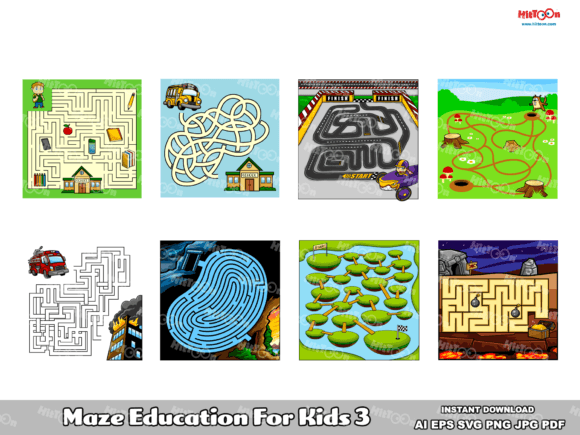
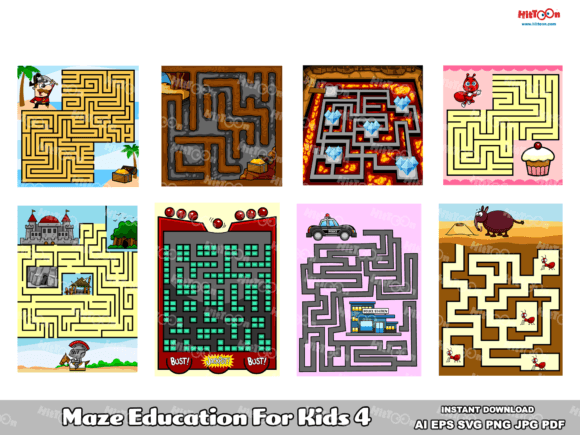
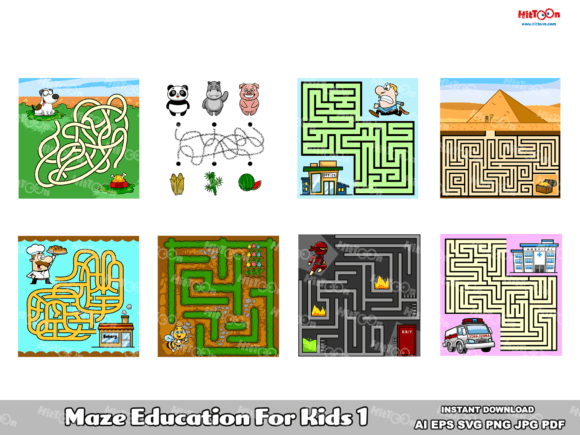
Opening the Maze Game Education for Kids 1 bundle, I was immediately struck by the clean, hand-drawn aesthetic. The set feels like it was designed with both learning and visual appeal in mind. Each illustration has a light-hearted, almost whimsical energy that’s perfect for children’s embroidery projects. The mazes themselves are varied in shape and complexity, offering flexibility for different product types. The lines are crisp, the spacing feels intentional, and the overall layout avoids being too cluttered—important traits when translating vector graphics into embroidered designs.
Real-World Use: From Tote Bags to Baby Onesies
I tested the Maze Game Education for Kids 1 illustrations on a few different project types to see how they’d hold up in real embroidery scenarios. Starting with a custom embroidered tote bag, I chose one of the medium-sized maze designs. The stitch-out was clean, with no noticeable distortion or thread bunching. The maze paths remained clear and distinct, which is essential if the idea is for kids to actually use the embroidered design as a play guide.
Next, I stitched one of the smaller maze illustrations onto a baby onesie. The fabric was soft cotton with a slight stretch, so I made sure to use a lightweight stabilizer. The result was surprisingly sharp. Even on a curved surface like a baby bodysuit, the maze maintained its readability and charm. This makes Maze Game Education for Kids 1 a solid choice for baby embroidery, especially if you’re targeting parents looking for educational yet cute designs.
Commercial Appeal: Etsy, Craft Fairs, and Boutique Merch
For Etsy sellers and small shop owners, this design set offers a unique value proposition. It bridges the gap between educational content and playful design, which is a hot niche in children’s handmade goods. Whether you’re creating embroidered patches, personalized aprons, or holiday-themed tea towels, these mazes can add an interactive element that sets your product apart.
I also tried using one of the mazes as a decorative accent on a custom embroidered sweatshirt. The larger size stitched out beautifully, with clear lines and smooth transitions between paths. The visual impact was strong, and the design felt intentional—like it wasn’t just a decoration, but a conversation piece. For boutique clothing or craft fair items, that kind of detail can make a real difference in customer engagement.
Where to Be Careful: Fabric, Size, and Detail Considerations
While Maze Game Education for Kids 1 performs well in most situations, there are a few areas where extra attention is needed. On textured fabrics like denim or thick fleece, some of the finer maze lines began to blur slightly. I’d recommend testing on fabric swatches first, especially if you’re using a dense stitch pattern that might obscure detail.
Dark fabrics also require careful thread color selection. I stitched one of the mazes in white on a navy background, and while the contrast was good, the smaller turns in the maze were a bit harder to follow. If you’re using this for personalized gifts or commercial embroidery, consider adding a light outline or using a contrasting thread to highlight the maze paths.
Small hoop sizes can be a challenge too. The more intricate mazes in the set lose some clarity when scaled down. If you're making embroidered patches or cap front designs, stick to the simpler maze layouts or adjust the design by simplifying the path lines before stitching.
Design Quality and Embroidery Readiness
As a designer, I always check how vector illustrations translate into embroidery files. Maze Game Education for Kids 1 is provided in AI, EPS, SVG, PNG, and JPG formats, which gives a lot of flexibility. However, it’s important to remember that these are illustrations, not pre-digitized embroidery files. You’ll need to convert them into machine embroidery designs using your preferred digitizing software.
During my test conversion, I found that the original line work held up well. The paths are consistent and the spacing between lines is generous enough to avoid issues with stitch density. That said, I still recommend manually checking stitch density, especially in tighter corners or around sharp turns in the maze. A little tweak here can prevent puckering or distortion on the final embroidered product.
Practical Designer Notes: What to Test Before Production
- Always test the design on scrap fabric before stitching the final product.
- Review thread color contrast, especially on dark or patterned fabrics.
- Check stitch density to avoid distortion on stretchy or thin materials.
- Confirm hoop size compatibility, especially for smaller or curved surfaces.
- Inspect small maze details to ensure they remain readable after stitching.
- Try a black and white mockup to see how the maze reads without color cues.
- Use appropriate stabilizer based on fabric type—lightweight for soft cotton, medium for stretchy knits.
- Confirm licensing terms before selling finished items or digital embroidery files.
Final Thoughts: A Smart Addition to Your Design Toolkit
Maze Game Education for Kids 1 is more than just a set of cute graphics—it’s a functional, adaptable design asset that can elevate your embroidery projects. Whether you're creating custom apparel, embroidered patches, or personalized baby gifts, this set offers a unique blend of education and entertainment. It’s especially valuable for Etsy sellers and craft entrepreneurs looking to differentiate their handmade products in a crowded market.
As with any design, it pays to test and adapt before mass production. But with a little preparation, Maze Game Education for Kids 1 can become a go-to resource for playful, meaningful embroidery that customers love to buy and kids love to explore.